What really goes into preparing a home for the market — and why it’s a lot more than fluffing pillows

There’s a phrase we use all the time in real estate:
“Just use your imagination.”
I hate it.
If I’m marketing a home, I don’t think it should be the buyer’s job to squint past the construction materials, mentally remove the pool vacuum, ignore the garbage cans, picture landscaping that isn’t there yet, and somehow arrive at what I already know the property can look like.
That’s my job.
And it’s one reason I believe the marketing of a home starts long before the listing goes live.
A recent example: there is no “after”
I recently photographed a new-construction home that wasn’t finished.
And actually, it’s still not finished.
The pool area is under construction. Materials are still around the property. The entry isn’t complete. There are plenty of things that make perfect sense on a construction site but make it difficult for a buyer to focus on the finished home.
So I took photographs of the home as it actually looks today and created AI-assisted concept visualizations showing what those same spaces could look like completed.
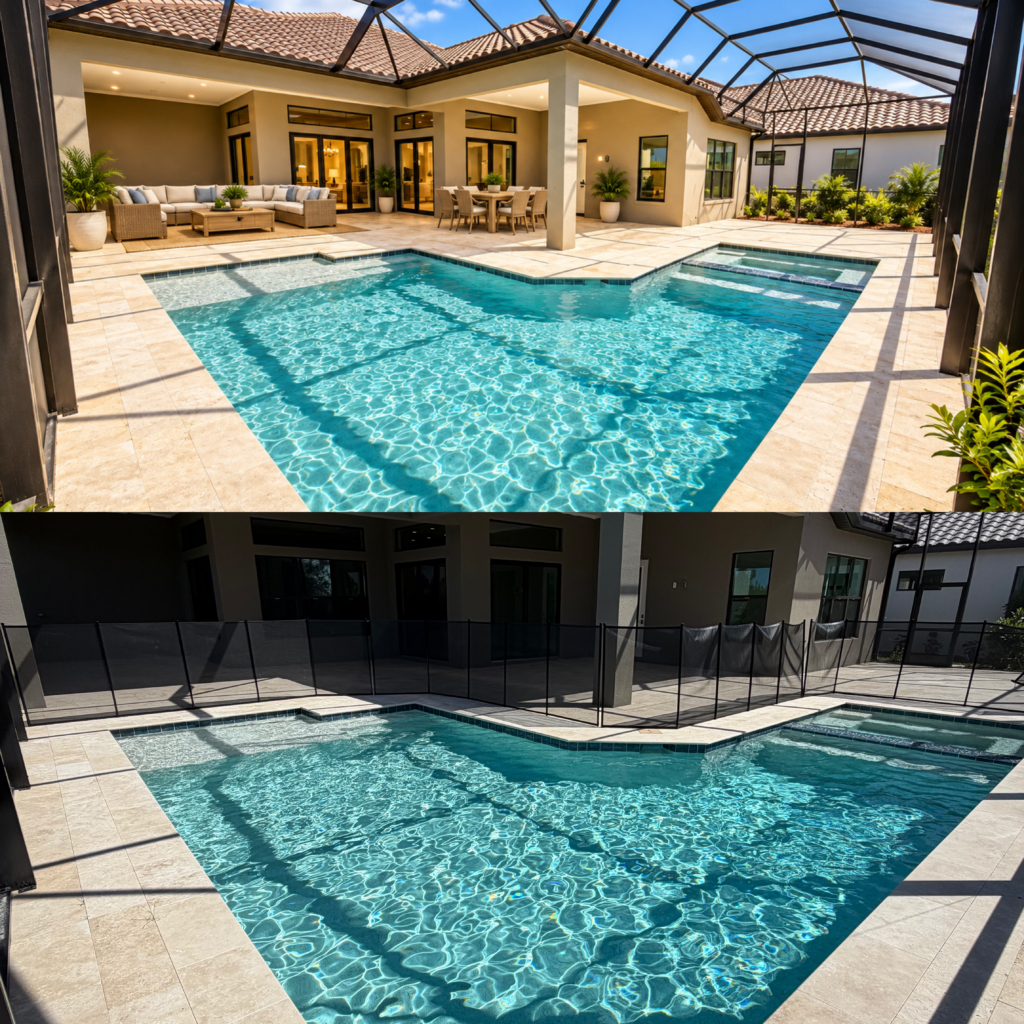
The concept images aren’t meant to replace reality, and they need to be clearly identified for what they are.
Their purpose is much simpler:
Help someone see past a temporary condition and understand the property.
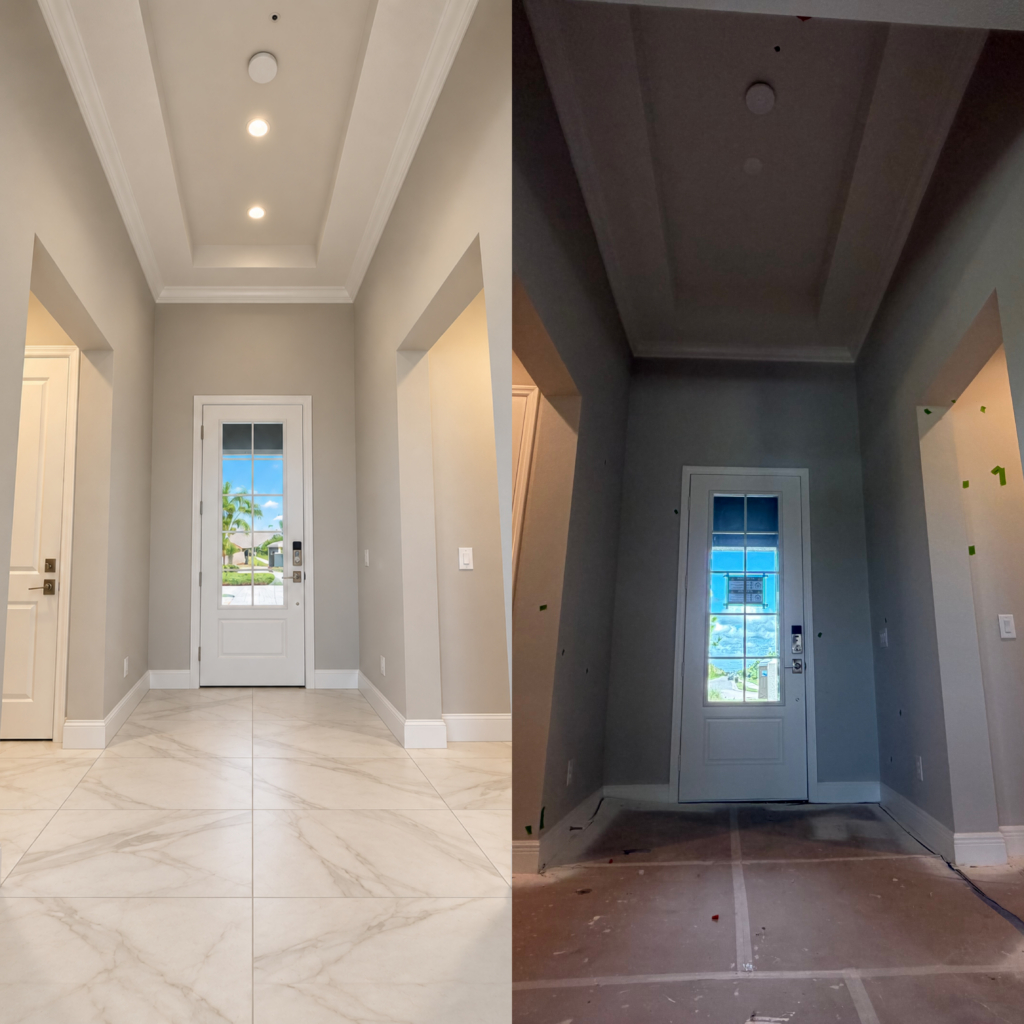
Technology gave me a new way to solve that particular problem. But the thinking behind it isn’t new at all.
I’ve been doing versions of this for sellers for years.
Good real estate marketing removes distractions
When people hear “prepare the house for photography,” they may picture someone fluffing the pillows and putting a bowl of lemons on the kitchen counter.
Sometimes it does involve fluffing a pillow.
But I’ve also been known to leaf-blow a driveway.
I attend my professional photography appointments because I’m looking at the property differently that day.
What is the camera seeing?
Is there something sitting on a counter that your eye barely notices in person but suddenly becomes the focal point of a photograph?
Is a trash can visible?
Are hoses lying across the patio?
Is the pool vacuum in the pool?
Is there something in the yard that should disappear for 20 minutes?
Does moving one chair open up the room?
Can we see the view we’re actually trying to sell?
Those aren’t huge things individually.
Collectively, they can completely change the way a property presents online.
And considering that’s where most buyers are going to meet the house for the first time, I think they’re worth paying attention to.
Yes, I take the pool vacuum out
I realize this sounds ridiculous.
It isn’t.
If I’m selling a Florida home with a beautiful pool, I want buyers looking at the pool.
Not the creepy little robotic thing crawling along the bottom of it.
So out it comes.
Hoses come out. Cleaning equipment gets tucked away. Patio furniture gets straightened. Leaves get blown off the deck.
I’ve moved garbage cans, hidden cleaning supplies, relocated dog bowls, cleared counters, adjusted furniture, and carried plenty of things out of camera range.
None of this changes the house.
That’s the point.
I’m not trying to change what the property is. I’m trying to remove the things preventing you from seeing it.
Vacant houses need preparation, too
It’s easy to assume an empty house is automatically photo-ready.
It isn’t.
That’s why my sellers receive a Honey-Do list before photography, including sellers of vacant properties.
An empty house can still have burned-out bulbs, dirty windows, debris in the driveway, landscaping that needs attention, leftover supplies, visible cords, forgotten items in cabinets or garages, and dozens of little distractions.
Nobody lives there anymore, which can actually make some of those things easier to miss.
A vacant house deserves the same final walk-through and attention as an occupied one.
Maybe more.
I attend the photography appointment for a reason
Professional photography is one of the most important pieces of listing marketing, so I’ve never understood treating the appointment like a handoff.
The photographer is there to photograph the house.
I’m there to market it.
Those jobs overlap, but they’re not identical.
I know which features matter. I know what I want buyers to notice. I know the property’s competition. I know the story we’re trying to tell.
And sometimes I notice something from behind the camera that didn’t bother me at all when I walked through the room five minutes earlier.
Move it.
Hide it.
Straighten it.
Open it.
Close it.
Take it out of the pool.
I’ve even been the person cleaning up the driveway because I’d rather spend five minutes doing that than look at leaves in the listing photos for the next three months.
Your first day on the market matters
This is the bigger reason I’m so particular about all of this.
When a property goes live, I don’t want to think:
We’ll fix that later.
We’ll replace those photos.
We’ll clean that up next week.
We’ll finish the landscaping eventually.
We’ll explain it when buyers get here.
There are situations where a property needs to be marketed before everything is perfect. The unfinished home I showed above is a perfect example.
But that’s when the marketing strategy should adapt to the situation.
Sometimes the answer is waiting.
Sometimes it’s changing the photography.
Sometimes it’s explaining something better.
Sometimes it’s showing a buyer what isn’t immediately obvious.
And increasingly, technology gives us additional tools to do that.
What I don’t want to do is simply throw a property online and hope buyers figure it out.
AI is a tool. It isn’t the strategy.
I’m excited about what AI can do for real estate marketing.
I’m also very aware of the line between helping someone visualize something and making them believe something exists when it doesn’t.
That’s why transparency matters.
If an image has been digitally altered, virtually staged, or created to illustrate a possible finished condition, buyers should know that.
And the actual condition of the property shouldn’t be hidden.
For the unfinished home I showed above, the interesting part isn’t really the AI.
The interesting part is the problem:
How do I help someone understand this home before the construction is finished?
AI happened to give me a useful way to answer it.
Six months from now, there will probably be another tool.
The technology will keep changing.
The job doesn’t.
It’s not about making everything perfect
Real houses have quirks.
They have weird closets and scratched floors and rooms that don’t photograph beautifully from every angle.
Marketing a home well isn’t about pretending those things don’t exist.
And it’s definitely not about digitally creating a house that isn’t there.
It’s about being intentional with the property you do have.
What’s special about it?
What might distract buyers from seeing that?
What needs to happen before photography?
What should we emphasize?
What shouldn’t be the first thing someone sees?
And if something isn’t finished yet, what’s the clearest and most transparent way to help buyers understand where it’s going?
Those are marketing decisions.
The work buyers never see
Ideally, buyers never know somebody leaf-blew the driveway ten minutes before the photographer arrived.
They don’t know the pool vacuum was sitting on the patio five minutes earlier.
They don’t know there was a pile of stuff on the kitchen counter that’s now hiding in the laundry room.
They don’t know how many conversations, lists, walkthroughs, appointments, decisions, and tiny adjustments happened before they found the house on their phone.
They just see a home that catches their attention.
And that’s kind of the point.
Great listing preparation isn’t about making a house look like something it isn’t.
It’s about removing the distractions, anticipating what buyers will see, and giving the property the best opportunity to tell its story.
Sometimes that means beautiful professional photography.
Sometimes it means moving a pool vacuum.
Sometimes it means waiting another day.
And apparently, sometimes it means AI.
But no matter what tools we’re using, I still believe the most important part happens before anyone ever clicks “View Listing.”
Thinking About Selling a Home in Palm Harbor or the Tampa Bay Area?
You don’t need to know what to fix, what to move, what to hide, or whether your house is “ready” before you call me.
That’s the part we figure out together.
I help my sellers determine what is actually worth doing before they list — and, just as importantly, what isn’t worth spending money or time on.
Amanda Lebiszczak
Broker Associate | The Pretty House Team
Charles Rutenberg Realty
Exceptional Service. Proven Results.
FAQ
Should I finish every repair before listing my house?
No. Some repairs or improvements can make a meaningful difference in presentation or marketability, while others may not provide enough benefit to justify the cost or delay. I prefer to walk through the home with a seller first and prioritize what actually matters.
Why does listing photography matter so much?
For many buyers, online photos are their first introduction to a property. Good photography can’t fix an undesirable property, but poor preparation and photography can make a good property much easier to overlook.
Can AI be used to market a home for sale?
AI and digital visualization can be useful marketing tools, particularly for helping people visualize spaces, but digitally created or altered imagery should be used transparently and in accordance with applicable MLS, brokerage, advertising, and platform rules. It shouldn’t misrepresent a property’s actual condition.
When should I start preparing my home if I’m thinking about selling?
Before you’re ready for the photographer. An early walkthrough gives us time to decide what deserves attention, line up any necessary help, and avoid the last-minute scramble right before the home hits the market.